Alcohol E-Commerce Advertising: Compliance Across Google Shopping, Meta, and Amazon
The Nightmare of the "Ad Rejected" Notification Imagine this: You’ve just spent weeks planning a massive holiday campaign for your premium craft gin. The creatives are stunning, the copy is witty, and your budget is locked and loaded. You hit "publish" and go to sleep, expecting to wake up to a spik
The Nightmare of the "Ad Rejected" Notification
Imagine this: You’ve just spent weeks planning a massive holiday campaign for your premium craft gin. The creatives are stunning, the copy is witty, and your budget is locked and loaded.
You hit "publish" and go to sleep, expecting to wake up to a spike in online sales.
Instead, you wake up to a sea of red "Ad Rejected" notifications and a warning that your ad account is at risk of suspension. Frustrating, right? If you market beverages, you already know that alcohol ecommerce advertising is an absolute minefield.
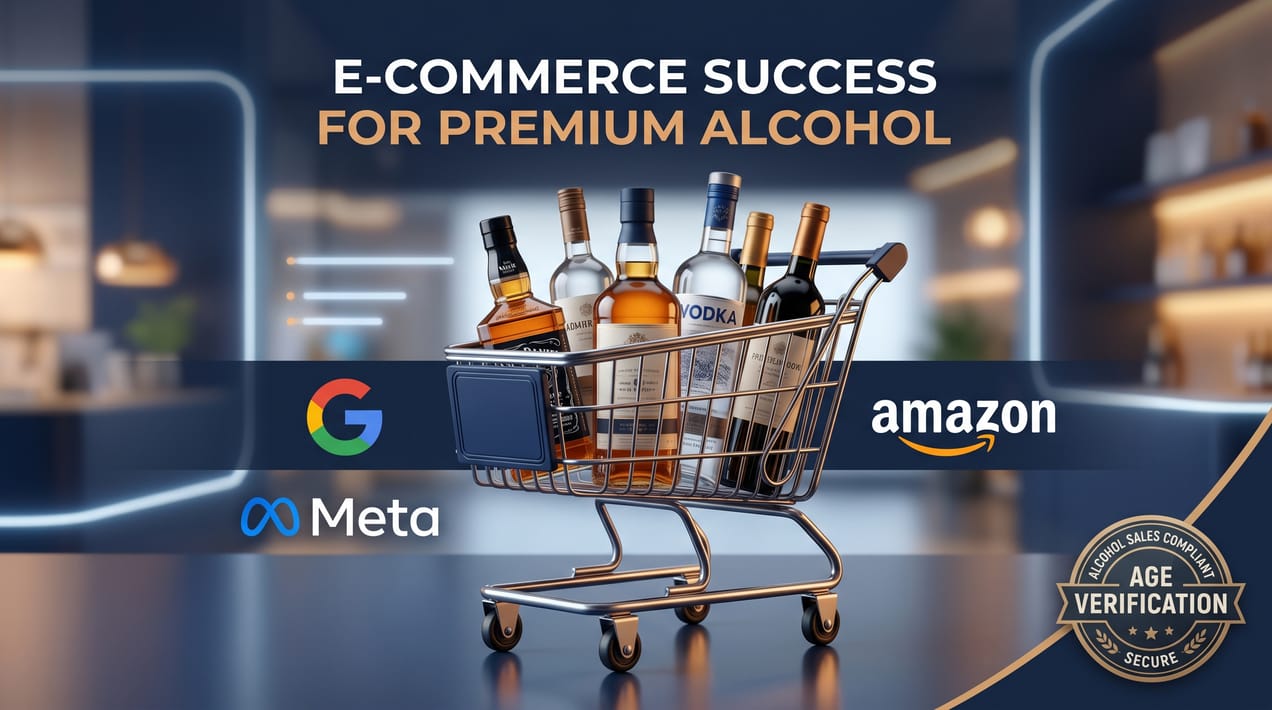
The online alcohol market is booming. According to the IWSR, ecommerce alcohol sales are expected to reach nearly $40 billion globally by 2026. But scaling your online sales means navigating a labyrinth of federal regulations, state laws, and notoriously fickle platform policies.
How do you capture a slice of that $40 billion pie without getting your accounts banned? Let's break down the rules of engagement across the major platforms.
Why Online Alcohol Ad Compliance Feels Like a Moving Target
Ever felt like you need a law degree just to run a simple retargeting campaign? You aren't alone.
The biggest challenge with online alcohol ad compliance is that there is no single rulebook. You aren't just dealing with the government; you are dealing with tech companies that have layered their own strict, often vague, policies on top of local laws.
In the United States, for example, you have to navigate the infamous three-tier system (producers, distributors, retailers). What is completely legal to advertise in California might earn you a hefty fine in Utah.
Consider this statistic: A recent industry survey found that nearly 40% of ad creatives in highly regulated industries face rejection on their first submission. That is a massive drain on your team's time and resources.
Platform algorithms are heavily automated. They scan your images, read your copy, and crawl your landing pages in milliseconds. If their bots detect even a hint of a violation—like a model who looks slightly under 25—your ad is pulled.
To succeed, you need a proactive approach. You need to understand exactly what Google, Meta, and Amazon are looking for before you spend a single dollar on production.
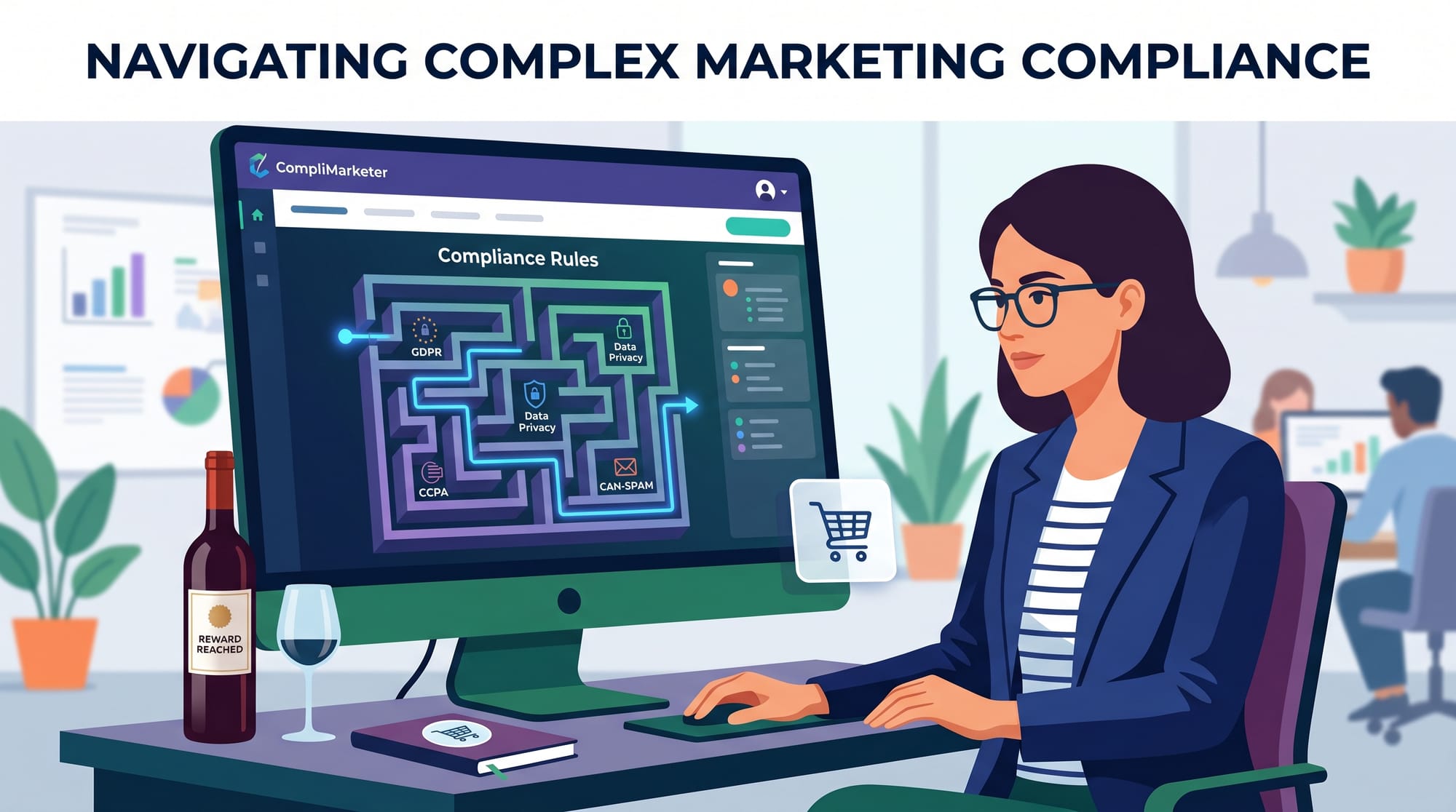
Cracking the Code on Alcohol Google Shopping Ads
When consumers have high intent to buy, they go to Google. In fact, Google Shopping ads drive over 76% of retail search ad spend.
However, getting alcohol Google Shopping ads approved requires jumping through several specific hoops. Google classifies alcohol as a "restricted content" category, meaning you can run ads, but only under very tight conditions.
First and foremost, your targeting must be flawless. You can only target countries where Google explicitly allows alcohol advertising, and you must strictly age-gate your campaigns to users 21 and older (in the US) or the local legal drinking age.
But the real hurdle for Google Shopping is the Google Merchant Center. To get your product feed approved, you must ensure:
- Landing Page Compliance: Your website must feature a robust age-verification pop-up before the user can view the product.
- Clear Policies: Your site must have easily accessible return, refund, and shipping policies clearly stated.
- Accurate Product Data: Your feed must accurately categorize the products using Google’s specific taxonomy for alcoholic beverages.
Google is also incredibly strict about the messaging in your Shopping feed. If your product title or description implies that the beverage provides health benefits or acts as a therapeutic agent, your entire feed could be suspended.
Are your product descriptions focusing on the flavor profile and origin, or are they making risky lifestyle claims? Keep it factual, keep it targeted, and always ensure your landing page matches the platform's strict requirements.
Meta Advertising: Navigating Facebook and Instagram's Booze Rules
Social media is where brands build community and desire. Studies show that over 70% of alcohol buyers discover new brands through social media platforms.
But Meta (Facebook and Instagram) has a complex relationship with alcohol. While they want your ad dollars, they are terrified of regulatory backlash regarding underage drinking.
Meta's policy is clear: Ads that promote or reference alcohol must comply with all applicable local laws, and they must be age-targeted to the appropriate demographic. But the rules go far deeper than just setting an age filter.
Meta's AI is notoriously sensitive to the context of your ad creatives. Here are the unwritten rules you need to follow to avoid the ban hammer:
- No Social Success Claims: You cannot imply that drinking your product will make someone more attractive, popular, or successful.
- No Operating Machinery: Never show alcohol near cars, boats, or even bicycles. Even a background prop can trigger an AI rejection.
- The "25-Year-Old" Rule: While you are targeting 21+, anyone featured in your ad must clearly look like they are over 25 years old. If Meta's AI thinks your model looks 19, the ad is gone.
Furthermore, if you are working with influencers, you must ensure they are using the Branded Content tool and applying the same age restrictions to their posts. An influencer slipping up can result in your brand's ad account being penalized.
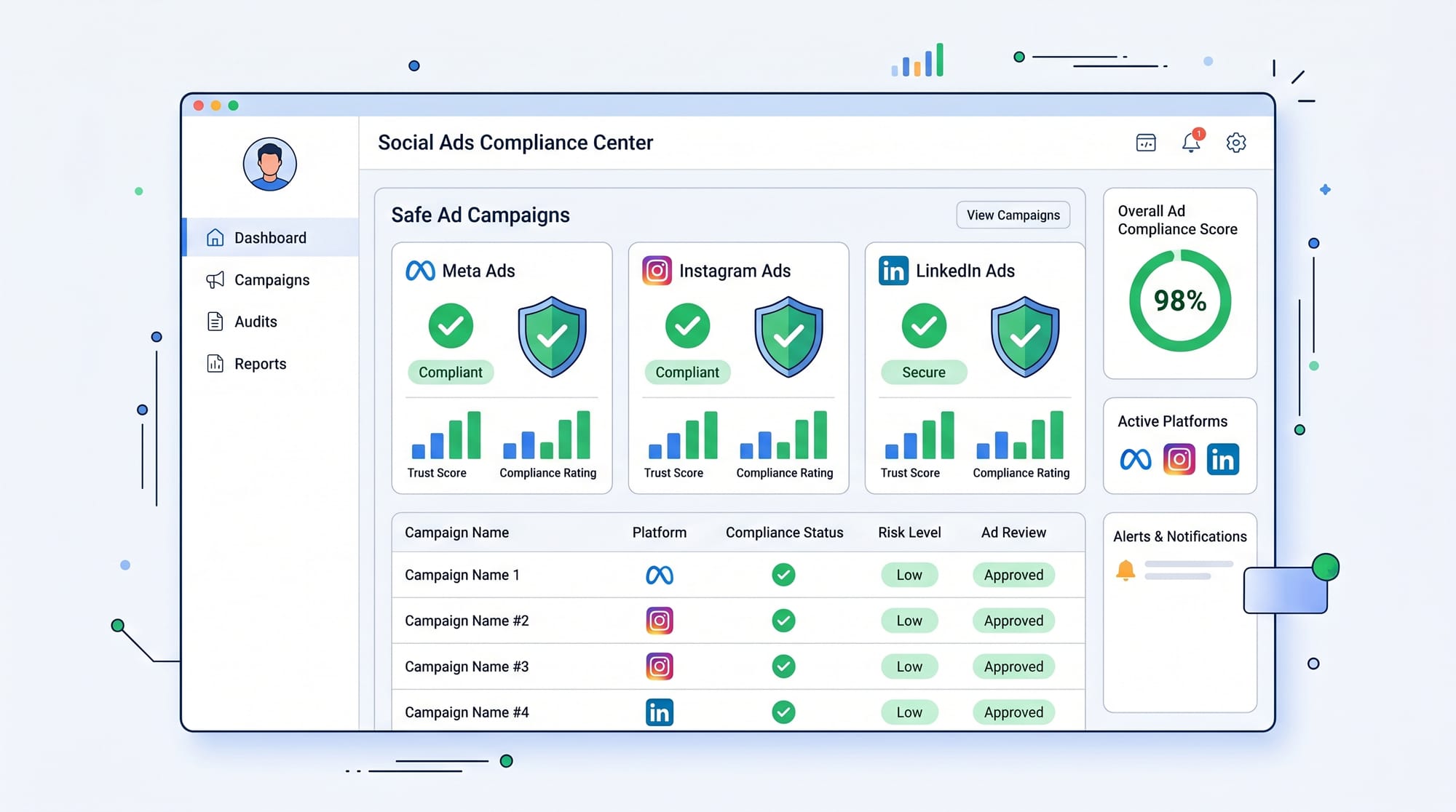
Mastering Alcohol Amazon Advertising
Amazon is the final boss of ecommerce. With Amazon’s ad revenue topping $37 billion annually, it’s a marketplace you can’t afford to ignore.
However, alcohol Amazon advertising is a completely different beast compared to Google and Meta. Amazon’s rules vary wildly depending on the region and the specific advertising product you are trying to use.
In the United States, you generally cannot use Amazon Sponsored Products or Sponsored Brands to promote hard liquor, wine, or beer directly to consumers. Why? Because Amazon does not want to run afoul of the complex state-by-state shipping laws.
But there is a loophole: the Amazon DSP (Demand Side Platform).
Through Amazon DSP, alcohol brands can run display and video ads to Amazon’s massive audience, driving traffic either to a compliant external website or to a licensed retailer (like Drizly or a local grocery delivery service).
If you are advertising in regions like the UK or Germany, the rules are slightly more relaxed, allowing for more direct advertising of alcohol products on the platform, provided you use Amazon's strict age-gating features.
When using Amazon DSP, you must ensure your creatives adhere to Amazon's "family-friendly" guidelines. This means:
- No excessive consumption depicted.
- No association with aggressive or anti-social behavior.
- Mandatory inclusion of responsible drinking messages (e.g., "Drink Responsibly") in a legible font size.
Navigating Amazon requires a deep understanding of the difference between brand awareness campaigns (which are generally allowed via DSP) and direct-response sales campaigns (which are heavily restricted).
Common Creative Pitfalls That Trigger Ad Rejections
We've talked about the platforms, but what about the actual images and videos you are producing?
It is heartbreaking to spend $10,000 on a video shoot only to realize the footage violates core compliance guidelines. Data shows that creative-based violations account for over 60% of all alcohol ad rejections.
Here are the most common creative pitfalls that will instantly trigger a rejection across almost all platforms:
1. Showing the Act of Drinking
This surprises many new marketers. In many regions and on several platforms, you can show people holding a drink, clinking glasses, and laughing. But the moment the glass touches their lips and they consume the liquid? Rejected. It is always safer to show the anticipation of the drink rather than the consumption.
2. Implied Health or Therapeutic Benefits
Consumers are increasingly health-conscious, and brands want to highlight low-calorie or organic attributes. But tread lightly. Words like "healthy," "cure," "relaxing," or "stress-relief" are massive red flags. You cannot imply that alcohol is a solution to a problem or a way to improve physical health.
3. Appealing to Minors
This is the fastest way to get your account permanently banned. Your ads cannot feature anything that might appeal to children. This includes cartoons, animated characters, overly sweet or candy-like visual themes, or slang that is heavily associated with youth culture.
4. Irresponsible Pouring or Volume
Showing a massive lineup of empty shot glasses or a giant, overflowing punch bowl implies binge drinking. Platforms want to see moderation. Show a single, perfectly poured glass of wine or a neatly garnished cocktail.
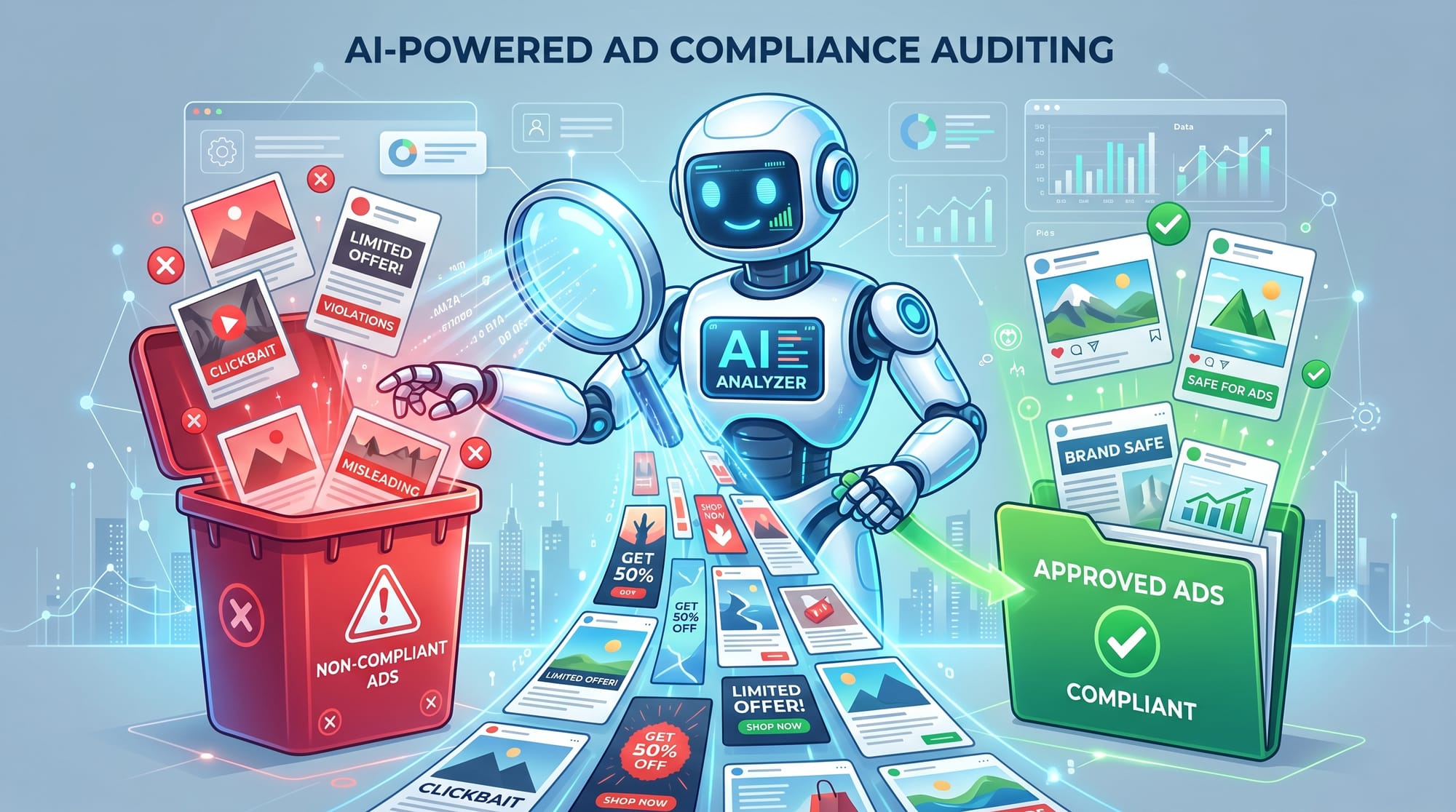
The Hidden Cost of Manual Compliance
How is your team currently handling these rules? If you are like most brands, you rely on a slow, manual review process.
Your creative team designs an ad. They send it to the legal or compliance team. Legal takes three days to review it, sends back a list of changes, and the cycle repeats. By the time the ad is actually approved, the cultural trend you were trying to capitalize on has already passed.
A recent study on marketing efficiency found that compliance reviews can delay campaign launches by an average of 12 days in regulated industries.
That is 12 days of lost revenue. It is also a massive waste of human capital. Your designers should be designing, and your legal team should be handling high-level strategy, not squinting at a Facebook ad to guess if a model looks 24 or 26.
Manual compliance is not just slow; it is prone to human error. A tired compliance officer might miss a background detail, resulting in a published ad that eventually gets flagged by a platform's AI, putting your entire ad account in jeopardy.
How to Automate Your Compliance Workflow
The solution isn't to hire more lawyers or stop advertising. The solution is to fight AI with AI.
If Google, Meta, and Amazon are using artificial intelligence to scan and reject your ads, you should be using artificial intelligence to pre-screen your ads before you ever upload them.
This is where HawtAds changes the game. As an AI-powered ad creative compliance and automation platform built specifically for regulated industries, HawtAds acts as your instant, automated legal review.
Instead of waiting days for an answer, you can run your creatives and copy through the platform. The AI instantly analyzes the assets against the specific rules of Google, Meta, Amazon, and local regulations.
It will flag if a model looks too young, if your copy makes an unauthorized health claim, or if a background element violates a platform policy. It doesn't just tell you that the ad is wrong; it tells you exactly why and how to fix it.
Actionable Takeaways for Your Next Campaign
Alcohol ecommerce advertising doesn't have to be a guessing game. By understanding the rules and leveraging the right technology, you can scale your campaigns confidently.
Before you launch your next campaign, follow this quick checklist:
- Audit Your Landing Pages: Ensure your age-gates are airtight and your policies are visible before submitting to Google Merchant Center.
- Check Your Models: Make absolutely sure everyone in your Meta and Amazon creatives looks visibly over the age of 25.
- Review the Copy: Strip out any language that implies social success, stress relief, or health benefits. Keep it focused on taste, origin, and brand heritage.
- Automate the Process: Stop relying on slow manual reviews. Integrate compliance software into your creative workflow.
The brands that win in the alcohol ecommerce space aren't necessarily the ones with the biggest budgets. They are the ones who can move fast, adapt to platform changes, and keep their ad accounts healthy and active.
Ready to stop fearing the "Ad Rejected" notification? Take control of your creative process and ensure every ad is primed for approval before it ever leaves your outbox.