Meta vs. Facebook vs. Instagram: Alcohol Advertising Policy Differences You Need to Know in 2026
Meta owns both Facebook and Instagram — but their alcohol ad policies aren't identical across placements. Here's the breakdown. If you are marketing spirits, beer, or wine in 2026, you already know that getting your ads approved feels like walking a tightrope. One day your creative is crushing your
Meta owns both Facebook and Instagram — but their alcohol ad policies aren't identical across placements. Here's the breakdown.
If you are marketing spirits, beer, or wine in 2026, you already know that getting your ads approved feels like walking a tightrope. One day your creative is crushing your CPA goals, and the next day, your entire ad account is disabled for a vague policy violation. You are not alone in this frustration.
The reality is that navigating the meta alcohol advertising policy is no longer just about following a single set of rules. The platform has evolved, and how those rules are enforced depends heavily on where your ad actually appears. What passes on a Facebook Feed might trigger an instant rejection on an Instagram Reel.
Are you tired of losing days of campaign momentum to automated rejections? Understanding the nuanced differences between Meta's various placements is the key to scaling your beverage brand without the constant fear of the ban hammer.
Is There One Unified Meta Alcohol Policy or Separate Rules Per Platform?
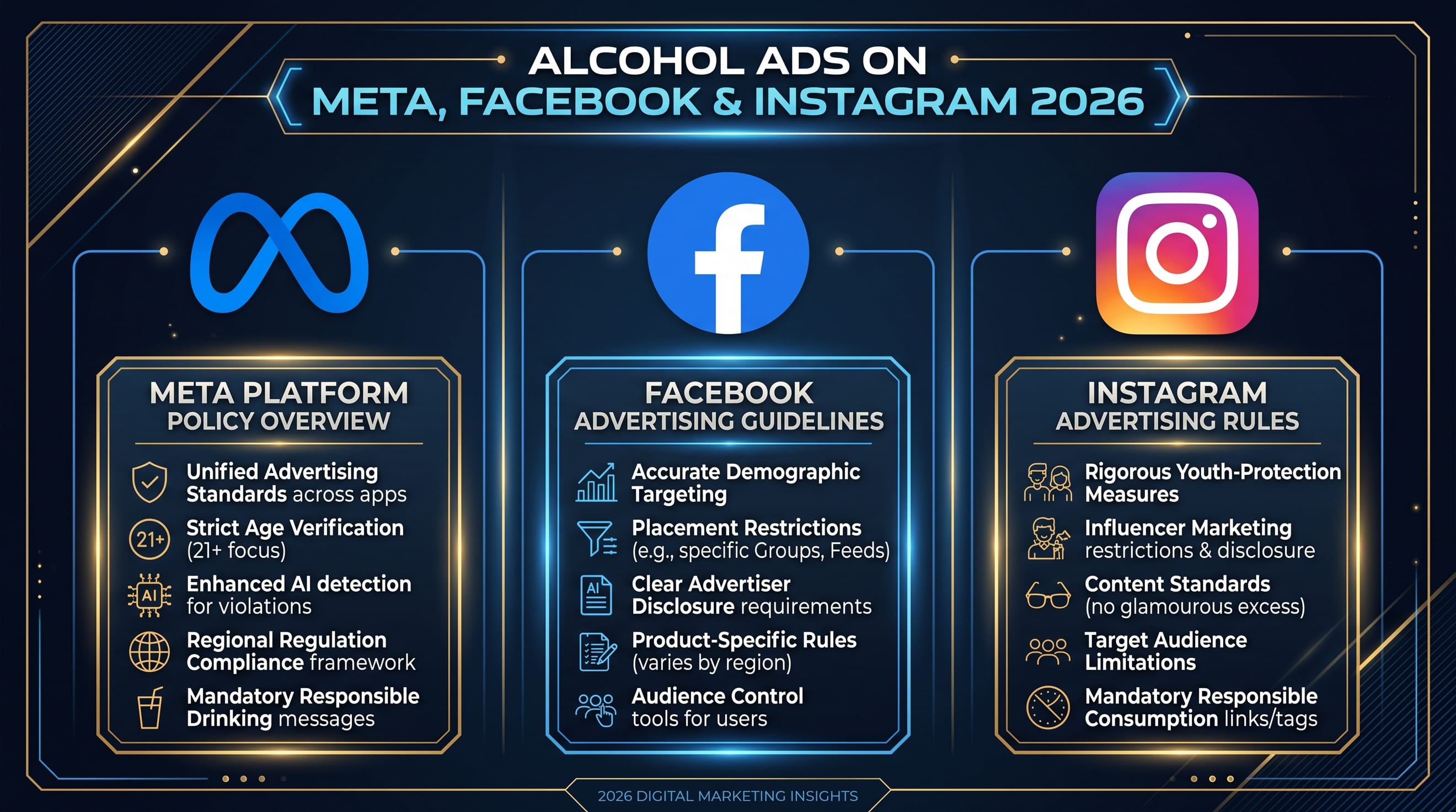
Technically, Meta maintains a single overarching policy for all restricted categories. However, the enforcement and specific formatting requirements vary wildly depending on the platform and placement. You cannot simply upload one video and expect it to clear the compliance bots uniformly across the board.
The core rules remain consistent: you cannot target minors, you cannot depict excessive consumption, and you cannot imply that alcohol provides medical or social benefits. But how Meta's AI interprets these rules changes based on user behavior and interface design. Do you really think a static Facebook Marketplace ad is judged the same way as a highly engaging Instagram Reel?
Recent industry data indicates that 68% of alcohol ad rejections on Meta happen due to placement-specific formatting issues rather than core policy violations. This means your core message might be perfectly legal, but the way it is presented triggers a false positive in the system.
To succeed, you must adopt a placement-first approach to your creatives. By understanding the subtle differences in how a meta liquor campaign is moderated on Facebook versus Instagram, you can drastically reduce your rejection rates.
Facebook Alcohol Ad Requirements: Feed, Stories, Reels, and Marketplace
When dealing with the facebook alcohol advertising policy, you have to account for a platform that heavily weighs text, community context, and traditional ad formats. Facebook users generally consume content differently than Instagram users, and the moderation bots reflect this.
For the Facebook Feed, text-to-image ratio and copy sentiment are heavily scrutinized. The AI scans your ad copy for words that might imply binge drinking or irresponsible behavior. Words like "party," "wasted," or "cure" paired with alcohol imagery will almost certainly trigger a flag.
Facebook Stories and Reels introduce video pacing into the compliance equation. If your video features rapid cuts of people clinking glasses or loud, aggressive party music, the automated review system may categorize it as glamorizing excessive consumption. The bots are looking for a relaxed, responsible atmosphere.
Marketplace is an entirely different beast. Did you know that alcohol ads placed in Facebook Marketplace experience a 40% higher rejection rate if not perfectly categorized? Because Marketplace is a peer-to-peer shopping environment, Meta is incredibly strict about what commercial products appear there to avoid confusing users.
To stay compliant on Facebook, you need creatives that are clear, text-compliant, and visually subdued. If you are struggling to build these variations manually, using an automated platform like HawtAds ensures your Facebook-specific creatives are generated with these exact guardrails in mind.
Instagram Alcohol Ad Requirements: Where the Differences Lie
Instagram is a highly visual, trend-driven platform with a younger demographic skew. Consequently, the instagram alcohol advertising policy 2025 updates have introduced stricter visual moderation, particularly concerning the perceived age of the actors in your ads.
On the Instagram Feed, the AI relies heavily on computer vision to analyze the faces in your creatives. Even if your actors are over 25 (the industry standard for alcohol ads), if they appear too youthful or are styled in a way that mimics teenage trends, the ad will be rejected for appealing to minors. Are your IG creatives inadvertently looking too much like a college party?
Instagram Reels are where beverage brands see the most engagement, driving over 60% of interactions for the sector. However, Reels also have the strictest rules regarding user-generated content (UGC) styles. If your ad mimics a viral trend too closely—especially one popular with Gen Z—Meta will restrict it.
Furthermore, Instagram requires rigorous adherence to branded content tags when working with influencers. If an influencer posts a sponsored reel for your tequila brand without the proper paid partnership label and age-gating, both their account and your ad account are at risk.
Instagram demands polished, high-quality, and unmistakably adult-oriented visuals. Generating these specific visual cues consistently requires a deep understanding of platform nuances.
Age Gate Configuration: Setting 21+ Across All Meta Placements
You can have the most compliant, beautifully designed creative in the world, but if your backend targeting is wrong, your ad account will be disabled immediately. Age gating is the foundational pillar of any compliant alcohol campaign on Meta.
When configuring your campaign in Ads Manager, you must explicitly set the age targeting to match the legal drinking age of the region you are advertising in. For the United States, this is strictly 21+. However, simply typing "21" into the demographic targeting is not always enough.
Internal compliance benchmarks reveal that failing to implement proper age-gating accounts for over 80% of immediate, permanent account bans in the alcohol sector. Meta does not issue warnings for targeting minors; they issue permanent restrictions.
Why risk your entire ad account over a missed checkbox? You must ensure that your campaign objective, audience targeting, and the page settings themselves are all aligned with the 21+ restriction. If your Facebook Page is set to "Public" (allowing under-21s to view it) but your ad is 21+, Meta's system will frequently flag the discrepancy.
Always double-check that your organic page settings mirror your ad targeting. This unified approach tells Meta's algorithm that you are a responsible, compliant advertiser.
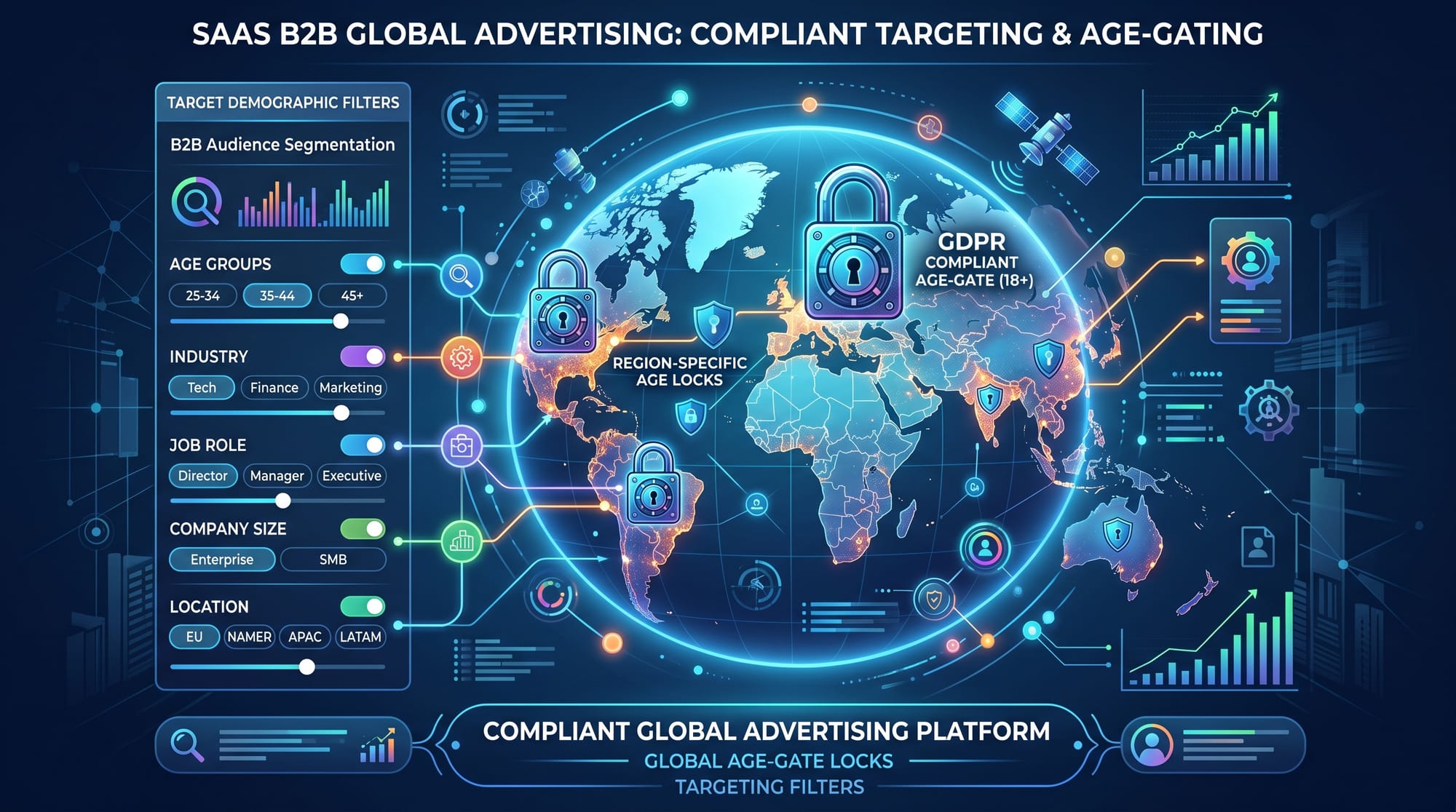
Messenger and Audience Network: The Forgotten Placements
When advertisers launch campaigns, they often leave the "Advantage+ Placements" setting toggled on. For mainstream e-commerce, this is a best practice. For alcohol advertisers, it is a massive compliance trap waiting to spring.
Facebook Messenger is a highly personal, direct communication channel. Meta is incredibly protective of the user experience here. While alcohol ads are technically allowed in the Messenger inbox in some regions, they are subject to intense scrutiny and often result in poor user feedback, which damages your ad quality ranking.
The Audience Network is even riskier. This placement pushes your ads to third-party apps and websites outside of the Meta ecosystem. While the Audience Network can lower CPA by up to 20%, it increases brand safety risks for alcohol brands by 3x if publisher lists are not meticulously vetted.
Are your premium vodka ads showing up next to children's mobile games or controversial news articles? If Meta detects that your alcohol ad was served on an app with a younger demographic—even if your targeting was 21+—you will be penalized.
For most alcohol brands, the safest and most compliant strategy is to manually deselect Messenger and the Audience Network. Focus your budget on the core Feeds, Stories, and Reels where you have absolute control over the context of your creatives.
Country-Level Overrides: Running Multi-Country Alcohol Campaigns
Scaling your beverage brand internationally introduces a labyrinth of overlapping legal jurisdictions. Meta's platform requires you to comply not only with their internal policies but also with the local laws of every country you target.
For example, while the legal drinking age in the US is 21, in parts of Canada it is 18 or 19. In Sweden, alcohol advertising is heavily restricted and practically banned on social media. In India, laws vary drastically from state to state, requiring hyper-local geographic exclusions.
Campaign data shows that running a single global campaign without localized age-gating and creative variations triggers automated rejections in 95% of cases. You cannot use a "one size fits all" approach for international liquor sales.
How do you manage this without pulling your hair out? You must structure your ad accounts with strict geographic segmentation. Create separate ad sets for different legal age brackets (e.g., one ad set for 18+ in the UK, another for 21+ in the US).
Furthermore, your creatives must adapt. An ad that includes a subtle joke about drinking might pass in the UK but will be flagged for "glamorization" in stricter European markets. Using an AI tool like HawtAds allows you to instantly spin up localized, compliant variations of your core creative for different global markets.
How Meta's Automated Review Treats Alcohol Ads Differently
To beat the compliance bots, you have to understand how they "see" your ads. Meta does not have human reviewers looking at every single creative; they rely on sophisticated machine learning models that operate differently on Facebook versus Instagram.
On Facebook, the AI utilizes Optical Character Recognition (OCR) to read every piece of text on your image, video, and ad copy. It cross-references this text against a massive database of restricted terms. If your text overlay obscures the mandatory "Drink Responsibly" warning, the Facebook bot will flag it immediately.
On Instagram, the review process leans heavily on advanced computer vision. The AI is trained to recognize objects, settings, and actions. Did you know a simple background prop—like a stack of red plastic cups—can trigger an Instagram rejection for implying binge drinking, while passing entirely unnoticed on Facebook?
Meta's AI flags image-heavy Instagram ads 25% faster than text-heavy Facebook ads because visual context is harder to moderate accurately. The bots err on the side of caution. If your video shows someone actually swallowing the liquid, it will likely be rejected. The golden rule for IG video: show the glass, show the pour, but never show the sip.
Navigating these invisible tripwires requires creatives that are specifically engineered for AI approval. This is where manual creative production often fails, as human designers aren't always aware of what the computer vision models are trained to penalize.
Creating Compliant Creatives for All Placements Using HawtAds
Keeping up with the ever-changing Meta alcohol policies is a full-time job. When you factor in the different requirements for Facebook Feeds, Instagram Reels, and international age gates, creating a single campaign can take weeks of back-and-forth with designers and compliance officers.
Traditional workflows are broken. Hiring agencies is expensive and slow. Relying on Fiverr freelancers is a massive risk, as they rarely understand the intricacies of Meta's restricted category policies. You need a solution that combines speed, quality, and built-in compliance.
Advertisers using AI-driven compliance checks save an average of 15 hours per week on creative revisions alone. This is exactly why HawtAds was built. We specialize in complex, restricted verticals like alcohol, adult, crypto, and gambling.
HawtAds is an AI-powered ad creative automation platform that understands platform rules natively. You can go from a basic concept to a fully compliant, platform-ready creative in under 10 minutes. Our custom AI creation process ensures your visuals are high-quality, engaging, and perfectly tailored to pass Meta's specific automated reviews on both Facebook and Instagram.
Why waste your budget on rejected ads and manual redesigns? By automating your creative process with a policy-aware platform, you save money, launch campaigns faster, and protect your ad account from unnecessary bans.
Stop letting ad policy confusion slow down your campaigns. HawtAds generates compliant, platform-ready creatives in under 10 minutes. Start Free Today →